

Abortion
Unborn Development
When Does Life Begin?
While birth is certainly a milestone that we celebrate with joy, it is actually the culmination of an amazing journey that began months earlier… at fertilization.
An unborn baby’s heart begins beating just 22 days after fertilization. The heartbeat can usually be detected via ultrasound by 6 weeks gestation. The earliest brain activity ever recorded came from a 45-day-old embryo (just 8 weeks, 3 days gestation). By 10 weeks gestation, more than 90% of the baby’s body parts have formed. The earliest in utero surgeries have been performed by 12 weeks gestation. And by 15 weeks, unborn babies can feel pain.
Modern medicine and science tell us more about the development of each human being from fertilization to birth than ever before. Check out: The Voyage of Life
Discover amazing facts about our lives before birth
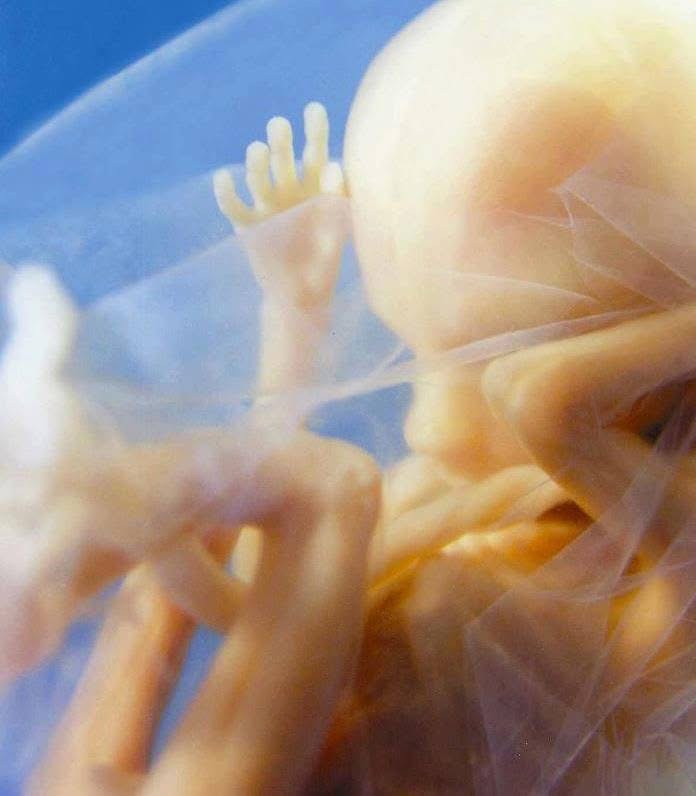
Pictured: Unborn baby at 16 weeks gestation
Scientific advancements provide clear evidence that unborn babies feel pain by 15 weeks gestation, and possibly even earlier. Pain processing appears to develop before the mechanisms that moderate pain signals, so unborn babies may experience an even greater intensity of pain than we do.
The youngest premature baby to survive was born at 21 weeks gestation (or 133 days premature).
The Science Behind Embryonic Heartbeats
Abortion
National Right to Life: Status of Abortion Report – 2026
Abortion Techniques (PDF)
The Abortion Pill
Mifepristone Safety & Efficacy
Factsheet: Abortion Pill Complications (PDF)
Report: Why Abortion Pill Complications Are Underreported
Study: Many Women Blindsided By Abortion Pill Complications
Factsheet: The Abortion Pill Aftermath: The experiences of women in their own words (PDF)
Charlotte Lozier Institute Report: Reproductive Coercion and Abortion
Abortion Pill Reversal
Do you regret taking the abortion pill? It may not be too late to save your baby.
Abortion Pill Reversal Hotline: 1-877-558-0333
abortionpillreversal.com
There is an effective process called abortion pill reversal that can reverse the effects of the abortion pill and allow you to continue your pregnancy, but time is of the essence. The abortion pill is the common name for a chemical abortion process that combines two medications.
After taking the first pill, some women regret their decision and want to reverse it. That’s where abortion pill reversal comes in. Using the natural hormone progesterone, medical professionals have been able to save 64-68% of pregnancies through abortion pill reversal.
Maryland Abortion Policy
Abortion Regulation and Enforcement in Maryland
Abortion Data Reporting in Maryland
Taxpayer Funding of Abortion
Studies show that more public funding for abortion results in more abortions. Polling reveals consistent majorities of Americans oppose the use of their tax dollars to pay for abortions. A Marist poll conducted in January 2026 found that 54% of Americans oppose funding domestic abortions while 69% oppose funding abortions in foreign countries.
In Maryland, our tax dollars are used to pay for abortions and to fund abortion providers like Planned Parenthood. Maryland Right to Life estimates Governor Wes Moore’s 2027 budget will spend upwards of $40 million dollars to fund abortions and abortion providers.
On the federal level, the Hyde Amendment, which prevents taxpayer funding of elective abortions in many federal programs, has proven to be the single greatest domestic abortion-reduction measure ever enacted by Congress, saving more than 2.6 million lives since it was first adopted in 1976. The Hyde Amendment has been renewed in every appropriations cycle since—with only limited modifications—reflecting enduring bipartisan recognition that taxpayers should not be compelled to fund abortion.
Planned Parenthood, the nation’s largest abortion provider, receives state and federal taxpayer dollars.
Factsheet: Planned Parenthood: Abortion- No Matter What (PDF)
Download and circulate a petition to let your elected representatives know that you do NOT support your hard-earned tax dollars being used to pay for abortions.
Pregnancy Help Centers
Pregnancy help centers offer compassionate support and material resources to pregnant women, their babies, and families. From the first phone call to long-term care, every part of a pregnancy help center’s work is designed to meet women where they are and walk with them through what comes next.
There are currently more than three dozen pregnancy help centers in the state of Maryland. In 2024, materials and services provided in the state of Maryland by pregnancy help centers were valued at an estimated $5.43 million dollars, serving more than 10,000 women, men, and children.
Among the services provided by many pregnancy help centers are pregnancy tests, options counseling, childbirth and parenting classes, ultrasound scans, temporary housing programs, STI/STD testing, adoption referrals, post-abortion support, miscarriage and stillbirth support, abortion pill reversal, and material resources like diapers, wipes, bottles and formula, baby and maternity clothing, car seats, strollers, high chairs, cribs, children’s books, and more.
Pregnancy Center State Impact Report- Maryland
Stem Cell Research
Advancements in science offer great promise for improving health. But science fails when research relies on the intentional destruction of human beings. Real progress upholds the dignity of every human life, always seeking to heal without causing deliberate harm. Maryland Right to Life opposes experimentation that involves the destruction of living human embryos or uses fetal tissue derived from aborted babies. We celebrate the great advancements made by adult stem cell research, which does not use human embryos.
Adult Stem Cell Research and Transplants
For more on stem cells, fetal tissue research, and bioethics, check out the Science Alliance for Life and Technology (SALT)
Born-Alive Abortion Survivors
Report: “After-Birth” Abortions or Modern Infanticide: Abandoning Babies to Die
Babies do sometimes survive abortions. These newborn infants deserve the same degree of medical care as any other baby born at the same gestational age.
Where there is abortion, there is unsuccessful abortion. But where there is life, there is hope.
For additional resources, check out the Abortion Survivors Network.
Down Syndrome
According to the National Down Syndrome Society: “In every cell in the human body there is a nucleus, where genetic material is stored in genes. Genes carry the codes responsible for all of our inherited traits and are grouped along rod-like structures called chromosomes. Typically, the nucleus of each cell contains 23 pairs of chromosomes, half of which are inherited from each parent. Down syndrome occurs when an individual has a full or partial extra copy of chromosome 21.”
Tragically in the United States, somewhere between 60%-90% of unborn babies diagnosed with Down syndrome are aborted.
People with Down syndrome are intrinsically and immeasurably valuable. Surveys show that people with Down syndrome are happy with their lives and they enrich the lives of their family members and communities.
Medical advancements have helped to increase the life expectancy of people with Down syndrome from about 10 years in the 1960’s to over 50 years in 2020. However, during the same period, expanded prenatal screening has resulted in more selective abortions.
Living with Down syndrome or caring for someone with Down syndrome both come with their fair share of challenges. However, some of the greatest challenges come as the result of societal attitudes. People with Down syndrome often face social stigma, isolation, and discrimination.
21 Pro-Life Things You Can Do for Individuals Living with Down Syndrome by: Eileen Haupt, co-founder of KIDS (Keep Infants with Down Syndrome)
Safe Haven
For immediate assistance, call or text the Safe Haven Crisis Helpline: 1-888-510-BABY (2229) – Help is available 24/7.
Safe Haven laws save babies from unsafe abandonment. The law states that parents who do not harm their infant will not be prosecuted for abandonment if they hand their newborn to a responsible adult at a Safe Haven location or utilize an infant safety device if one is available. It gives a desperate parent a responsible alternative.
In Maryland, the infant must be 60 days old or younger. Maryland Right to Life was instrumental in the passage of Maryland’s current Safe Haven law.
Factsheet: Maryland’s Safe Haven Law (PDF)
For more on Safe Haven, check out the National Safe Haven Alliance.
Additional resource: Maryland Department of Human Services- Safe Haven Brochure (PDF)
Additional Resources
Maryland Right to Life News: Check out Maryland Right to Life’s newsletters, press releases, media mentions, and more.
Resources by QR Code
Defending Life at Every Stage
Maryland Right to Life promotes respect for life from conception until natural death– and every stage in between. Stay informed about issues like assisted suicide and euthanasia, which threaten the lives of the elderly, the medically dependent, people living with disabilities, people suffering from chronic illnesses, and other vulnerable groups. Click here to learn more.
Maryland Right to Life Foundation, a registered 501(c)(3) charitable organization, is dedicated to educating the public about abortion, infanticide, assisted suicide, and euthanasia.
Maryland Right to Life | Who We Are (PDF)
If you would like to support our educational programs and initiatives, please consider making a financial contribution today. Donations to the Maryland Right to Life Foundation are tax-deductible. Donate today!